

.svg)


2026 is the year search looks less like search and more like a conversation. As the search landscape fragments between Google, ChatGPT, Perplexity, Claude, Copilot, and more, AI assistants are taking over the front door to brands. The rules of earning AI visibility are forming in real time. For brands, this creates both risk and opportunity: you can reshape and influence how your customers find, evaluate, and buy your products.
As we close out this transformative year and welcome everything to come in 2026, our own AI experts here at Botify — CEO Adrien Menard and VP of AI & Consulting Services AJ Ghergich — have crafted six predictions outlining the next era of AI-powered discovery and what they mean for you.
1. AI assistants become the new homepage
Your homepage used to be a destination for your customers, one that defined and guided their buyer journey. In 2026, the bulk of “customers” visiting your website to learn about and even purchase products won’t be people — they’ll be AI agents.
AI agents are becoming the messenger between brands and consumers, finding and reading your content long before humans do. Traditional UX still matters, but it’s no longer your only — or even dominant — audience. Now, you must serve two readers at once:
- Humans, who need clarity and ease via the text, visual, and dynamic elements that build an amazing user experience
- AI bots and agents, who need structure, context, and intent signals to inform an optimized bot experience
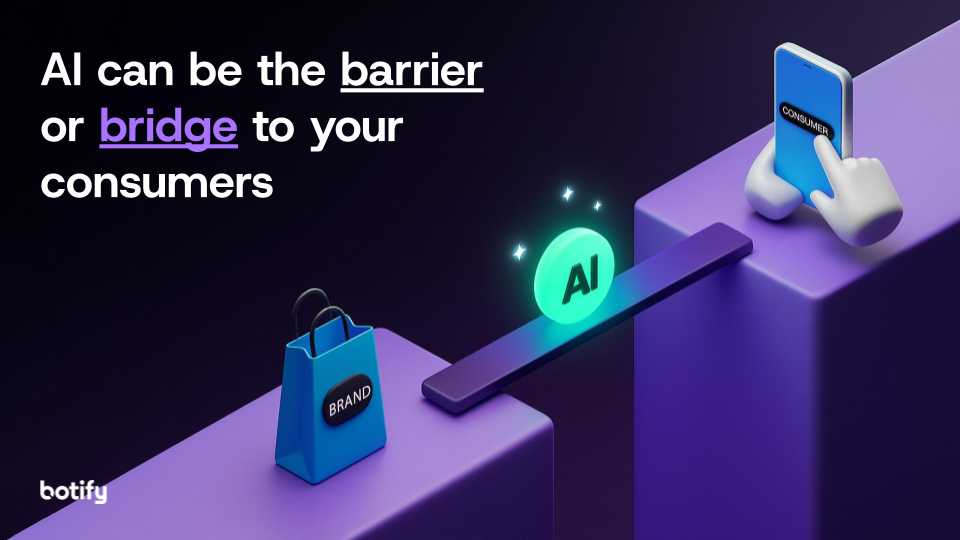
This shifts content strategy from “how do people navigate this page?” to “how do agents interpret and share it?” Brands that optimize for AI comprehension build a defensible moat as the journey shifts from blue links to AI-generated responses.
2. The rules of AI search are defined by who takes action now
Expect a clear divide between the brands that win, showing up in AI search, and those that get quietly omitted.
Unlike the last decade of SEO, norms and best practices for AI search aren’t yet established. How AI platforms decide what they index and how they attribute their outputs is still in flux, and may change based on regional regulations affecting the ways they can use the data they scrape.
This ambiguity creates an unusually powerful first-mover advantage. For established players in the search ecosystem, the challenge will be how quickly they can adapt. For newcomers, there’s a window of opportunity open now to get ahead by being agile and strategic.
Brands that move early to become answer-ready by ensuring their content is found by AI search bots and generating content aimed at consumer intent will dominate visibility. So far, AI platforms tend to rely on a small set of trusted, consistent sources, meaning early winners will become entrenched while laggards risk silent omission.
3. Zero-click becomes the default
Clicks defined the last 30 years of digital analytics. But in 2026, answers will take over.
The majority of high-intent queries, such as product discovery and comparisons, questions about specifications or fit, and even troubleshooting, will be resolved inside AI search engines — all without the need to click through to a website.
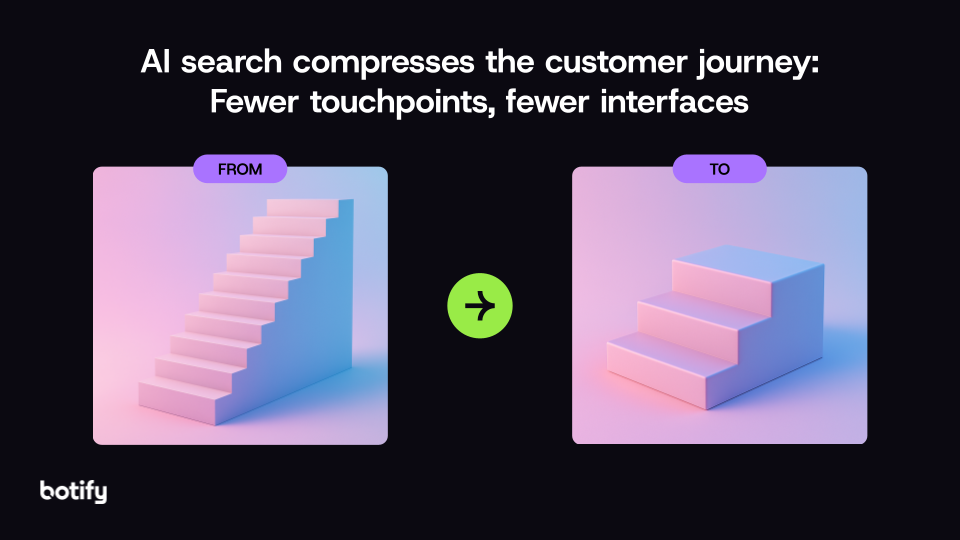
This creates a new mandate for brands: stay visible without clicks. Rather than relying just on traditional (and increasingly unreliable) metrics like impressions or click-through rate, brands must measure visibility in answer engines. If you aren’t mentioned in AI answers, you’re effectively invisible to potential consumers, regardless of how good your content is.
4. AI isn’t technology you rent; it’s a customer you serve
In 2026, treat AI as a new customer segment, not just a tool or platform.
AI agents are becoming the primary consumers of brand content. They crawl, evaluate, and prioritize content for users, serving as an interlocutor between consumers and brands and ultimately deciding what humans actually see. To serve this new middleman, brands must:
- Produce structured, answer-ready content
- Send technical signals that agents trust
- Track “agent traffic” as a performance indicator
- Optimize for inclusion in answer engines
- Build a governance plan around how your content is interpreted and reused by AI
- Ready for rising infrastructure costs from increased agent activity by making controls and optimization part of the go‑to‑market stack
The companies that prepare for AI as a customer, operationally and technically, will capture more visibility and more demand as consumer discovery becomes further removed from traditional search.
5. Brand authority is king in AI search
In AI-generated answers, your website is only one part of the story, and a small one at that.
AI platforms want to provide the most trusted answer to consumers, an answer that aligns perfectly with their intent. Trustworthiness and intent alignment is validated by multiple sources: editorial media, user-generated content like Reddit and reviews, credible sites like Wikipedia, and more.
These are the sources AI trusts when determining existing consumer sentiment and whether the brand is credible enough to cite.
In 2026, brand authority will thus become a core SEO input. PR, analyst relations, review velocity, social buzz — all of these will shape your AI search visibility just as much as your owned content and technical optimizations.
If the world isn’t talking about you, AI won’t either.
6. Product feeds are the new battleground — but AI needs intent, not just attributes
Product feeds were built for a structured, rules-based world: price, color, brand, GTIN, availability. Those fields still matter, but they’re not competitive differentiators. In AI search, your consumer’s discovery is driven by their intent:
- Intent: The consumer’s desire and needs
- Outcome: The motivation or “why” behind the intent
- Journey: The content they need to support their customer journey from discovery to conversion (expert reviews, product details, recommendations from other people, etc.)
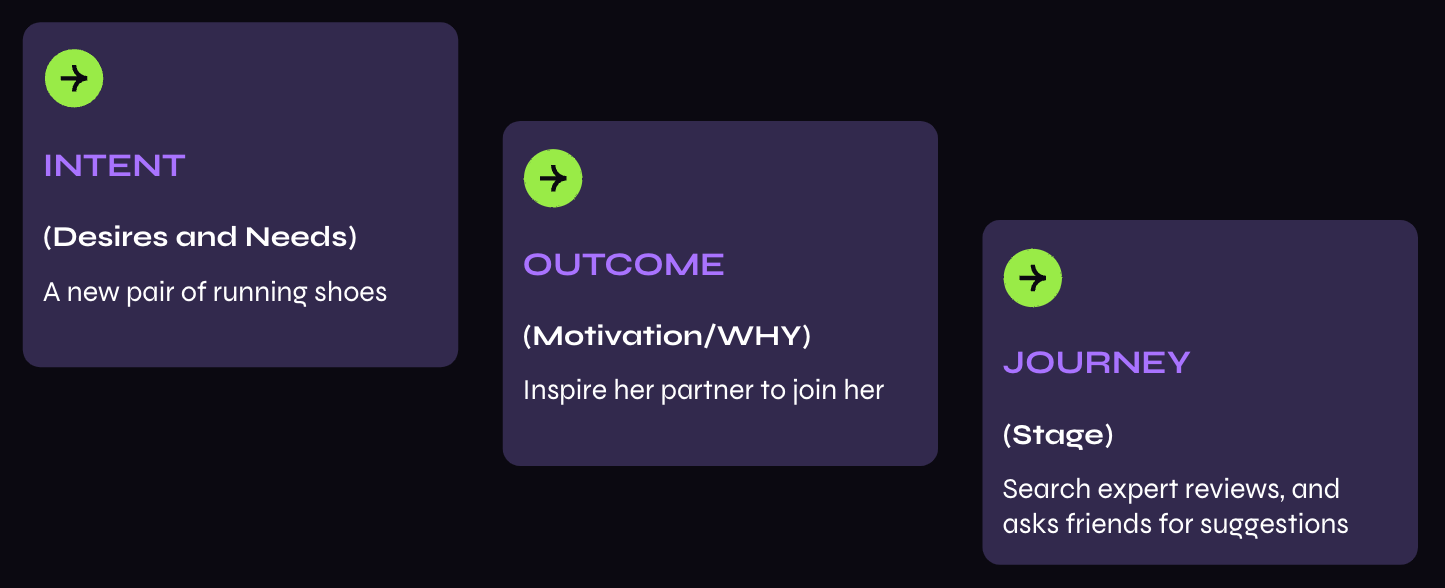
AI will answer queries like “lightweight running shoes for overpronators under $150” by looking for products enriched with purpose, benefits, and context, not just specs.
AI discovery rewards brands whose product data mirrors how real people think, shop, and ask questions. That means moving beyond basic specs toward rich, intention-driven detail that aligns with the way AI engines parse the world. In 2026, the brands that align their website content with the real, deep human intent driving their consumers to purchase will be the ones AI platforms mention, cite, and recommend.
In 2026, AI search is the new discovery layer
Staying visible is no longer about ranking on a page of ten blue links. Instead, it’s becoming an ecosystem of AI bots and agents that navigate the web and serve up content for us. That means that next year:
- AI will become the default entry point for potential consumers
- Presence in AI answers will replace clicks and other traditional metrics as a key performance indicator
- Public reputation will shape authority even more than it already does
- Product feeds will need to be fortified with intent alignment
- AI readiness will be crucial to maintaining competitive advantage
The brands that adapt first will own the future of discovery and be found in the next era of search optimization.
.png)

.svg)


.svg)
