-Blogpost%20Header.png)

.svg)


An agentic shift in online shopping
In January 2026, Google introduced the Universal Commerce Protocol (UCP), co-developed by Shopify and other major retailers. This is a new, open set of rules that allows smart, automated shopping programs, or AI agents, to talk directly to online stores.
The biggest change? UCP lets AI agents discover, compare, and buy products directly from a retailer’s systems, without visiting a product page or even loading the website in a browser. UCP focuses on enabling agents to execute checkout and commerce operations programmatically, while product discovery still leverages a combination of feeds, existing catalog infrastructure, and structured data.
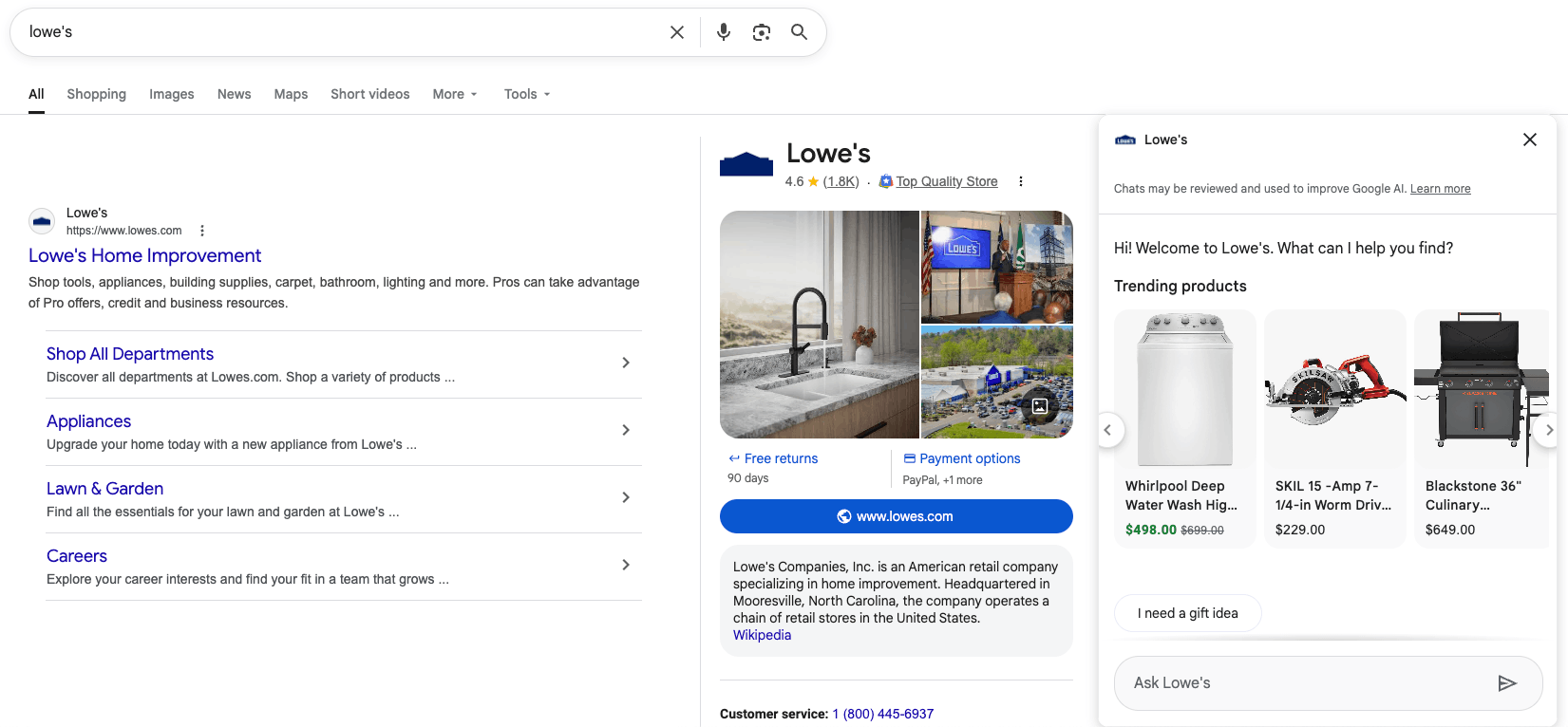
UCP will initially be surfaced in AI Mode in search and Gemini-based experiences with select launch US retailers and will be vertical-agnostic (e.g., travel, services, or subscriptions). It's designed to support a broad range of retail products surfaced through Merchant Center and to work seamlessly with existing payment and AI communication standards. Now available as a chat option within the Google SERP, there are also instances where consumers can already buy via UCP-powered checkout in Google’s AI Mode shopping results.
This marks a fundamental shift:
Instead of focusing only on making your website rank well in search, you also need to make sure your product data is immediately understandable, accurate, and real‑time for any shopping AI.
In other words, if an AI can’t confidently answer “Can I buy this right now?”, you lose the sale.
Why does UCP matter?
Universal connection (interoperability)
UCP creates a common language between shopping AIs, businesses, and payment systems so they can all work together. Merchants publish a simple “capabilities profile” and the AI figures out what it can do with that store, like guest checkout, discounts, pickup options, and payment methods.
Dynamic discovery & capability negotiation
Using the capabilities profile, UCP lets an AI quickly see what your store supports and agree on what’s possible for a given purchase. This includes things like payment methods, discounts, or shipping options.
Security & trust
Payments are handled through secure, tokenized wallets like Google Pay, so raw card numbers never touch the AI or your systems. Your payment providers continue to manage security and compliance as they do today.
Hands-free shopping via agentic commerce
UCP enables AI assistants to complete complex tasks for consumers, such as: "Find a highly rated, noise-canceling headset under $100 and buy it using my saved payment method."
How UCP changes e-commerce
UCP will allow AI shopping programs (like AI Mode in Google Search and Gemini) to directly ask an e-commerce system for the following information in real time:
- Product catalog and all available options (sizes, colors, etc.)
- Current pricing and promotions
- Inventory (stock) availability
- Shipping, returns, and policy details
- The ability to execute the entire checkout process
1. AI agents become shoppers
The shopping experience moves from being human-driven to AI-driven. The AI can:
- Instantly compare products across multiple retailers
- Apply appropriate discounts and loyalty programs
- Select the correct product options (size, color, fit)
- Complete the entire transaction
This reduces the reliance on how the product page looks or works and dramatically increases the reliance on the accuracy of your backend data. Importantly, under UCP, the merchant remains the seller of record and retains full ownership of customer data, order information, and the post-purchase relationship, subject to their integration design and applicable privacy regulations.
2. Product discovery moves off-site
Your products are now surfaced inside private AI conversations and chat windows, not just on traditional search engine results pages (SERPs) or category pages.
Example: The agentic customer journey
A traditional journey via organic search has multiple steps for consumers to follow:
- Perform a search (like “women’s pajamas”)
- Browse the pages of search results
- Click into a product page
- Evaluate the product, checking things like size, fabric, price, etc.
- Add the item to the cart
- Complete the checkout process on the website
The UCP-powered agentic customer journey is smoother and faster for consumers, and because transaction can happen via the AI, a traditional site visit may no longer be required at all:
- Perform an AI query, with more conversational and nuanced language (such as “Find women’s Valentine’s pajamas in a soft fabric, size M, under $100 with fast shipping")
- Approve or complete the AI purchase (browsing, product evaluation, and the checkout process can all be completed by the AI on the consumer’s behalf.)
%20(1).png)
3. Unified commerce data becomes critical
All your product information — inventory, pricing, merchandising, and policies — must be consistent, real-time, and machine-readable. Any mismatch or data lag could cause the agent to immediately skip your products in favor of a competitor with better data. UCP is designed to work with existing retail infrastructure: Google’s reference implementation uses Merchant Center as the primary on-ramp. This means merchants must extend their existing Merchant Center feeds as opposed to building an entirely new data pipeline.
E-commerce readiness checklist
All of this means the scope of how your products appear online now extends into your core data infrastructure. Here’s what your team should focus on now:
✅ Product data
Audit the organized, detailed information about every single product (feeds, unique IDs, available options.) Ensure size, color, fit, fabric, and seasonality are explicit. Add richer attributes (e.g., softness, breathability, fabric weight.)
✅ Inventory & pricing
Ensure real-time stock and price updates are available to the AI instantly. Eliminate stale or delayed inventory signals. Clearly expose promotions and eligibility.
✅ Feeds & protocols
Map your product data feeds to support UCP-style attributes. Expand structured data beyond basic requirements to support semantic relationships (like enabling the AI to recommend matching styles or bundles.)
✅ Checkout enablement
Support checkout flows that can be executed via an API. The AI agent must be able to complete a transaction without a manual product page redirect. Clearly expose shipping, returns, and delivery timelines in a machine-readable format.
How to participate in UCP
Participation in UCP requires several key steps:
- First, you need the data and engineering groundwork: clean product data, real-time inventory and pricing, and API-ready checkout flows.
- Next, you connect through Google Merchant Center and work with Google or platform partners (like Shopify) to enable UCP.
- Finally, you may join an early-access program or waitlist, since Google is rolling this out in phases with select retailers.
Keep in mind that while the protocol itself is open and global in scope, Google’s implementation is rolling out in phases, starting with select US retailers and launch partners.
What business leaders should know
For business leaders, there are four areas that matter most:
- Investment: UCP is a major update to your data and checkout systems, not a quick tweak. Expect real investment in data quality, engineering, and process change.
- Timeline: UCP is rolling out first with select US retailers, with broader availability to follow. Make sure you understand what's required if you want to be part of the early waves
- Data & trust: Payments stay secure through tokenization and wallets like Google Pay, and your providers still handle compliance. Your business will remain the seller of record and own the customer and order data. You will also continue to own support, returns, and the post-purchase relationship.
- Use cases beyond retail: UCP isn’t just for retailers. It's designed to be vertical‑agnostic and work across sectors like travel, services, subscriptions, and other complex, multi‑step purchases.
The industry direction is clear
UCP signals a structural shift in the e-commerce experience. All major platforms are converging on feed-based, real-time commerce access, capability-driven protocols, with secure tokenized payments and moving away from page-scraping or browser-based shopping flows.
The race is on to win the AI shopper. Brands that invest early in machine-readable commerce infrastructure — including capability profiles, structured feeds, and API-driven checkout — will be the ones AI agents recommend and buy from. As such, it’s never been more important to understand, measure, and take action to improve your brand presence and AI visibility.
Remember, UCP is not an SEO update; it is a data governance mandate. Brands that master their real-time data and capability exposure will be selected by the AI agents that control tomorrow's commerce.

.svg)

.svg)
