

.svg)


On a recent visit with family, Botify’s Global VP of Consulting Services, AJ Gergich, heard his mother offer several opinions from “Chad.” Things such as, “Chad says this restaurant isn’t good anymore.” But as far as he was aware, the family didn’t know anyone named Chad.
During this year’s CommerceNext in New York, AJ explained that his mother’s new friend “Chad” was actually a newfound trust in what she calls “Chat” — ChatGPT.
It’s a humorous (but telling) sign of how deeply AI tools are being woven into daily consumer behavior. Platforms like ChatGPT and Perplexity are quickly becoming the first touchpoint between your customer and your brand, which carries massive and rapidly approaching implications for how e-commerce brands show up online.
.png)
Let’s break down AJ’s key insights from his presentation, including where e-commerce is headed, how AI is reshaping consumer discovery, and what brands should do today to prepare for a very different tomorrow.
The end of traditional search dominance
We’ve lived in a Google-dominated world for a long time, but now search is decentralized. Consumers discover products through conversational interfaces like ChatGPT, not just search engines.
These platforms don’t return a ranked list of links. Instead, they summarize, synthesize, and even recommend. As AJ put it: “Your customer is switching interfaces. [They’re] going from search to conversation.”
This new AI-driven behavior is already impacting e-commerce:
- Increased search activity: Impressions have exploded, but…
- Clicks are down: There are more searches, but fewer actual site visits.
Look no further than Botify’s own retail and e-commerce customer data, which shows a 31% increase in impressions from 2024 to 2025, but with a significant drop in clicks:
.png)
Why is this happening? Because those summaries AI platforms are providing to users mean they never have to actually visit your site.
In traditional search, per session, users spend around 1.25 minutes conducting about 1.2 queries. Less than half of those searchers — 43%, according to a recent Backlinko study — actually end up clicking through, with 42% of clicks bouncing.
In contrast, with generative AI-powered search, users spend only about a quarter of a minute per session, conducting an average of 8 queries per session. Despite more searches, only 1–5% of searchers actually click through. The searchers who do click spend about three times as long on the site and are two times as likely to convert.
So, while fewer clicks might seem discouraging at first glance, the traffic coming into your site from those AI-assisted clicks is actually of higher quality and more likely to result in a sale.
The AI customer is already shopping
“AI isn’t a technology — it’s your customer.”
One of AJ’s boldest declarations during his presentation, AI agents are already browsing your website, reading your content, and determining whether or not you’re visible to consumers. And soon, they’ll be able to go further, taking actions such as adding items to carts, booking tickets, and even completing transactions autonomously. “Early adopters are already testing AI shopping/task assistants, such as ChatGPT Agent, that can handle simple purchases,” says AJ. “By Christmas 2025, we'll see polished agents managing full transactions: finding products, comparing prices, handling checkout, tracking deliveries.”
The key bottlenecks are trust and infrastructure. People need to feel comfortable handing over their credit cards to an agent, and stores need seamless API connections, but these won’t hold mainstream adoption back for long. “I predict mainstream adoption by Black Friday 2026,” says AJ. “That's when the tech gets reliable enough for average consumers and retailers to have proper AI integration built out.”
This AI-as-customer model flips traditional e-commerce on its head. You’re no longer just selling to people. Rather, you’re also selling to machines that influence or execute buying decisions on behalf of people, and those machines have different needs. Take for example the fact that most AI bots do not render JavaScript, meaning all your features aimed at enhancing the user experience on your website might be completely invisible to this new customer segment.
The same way you spent years prioritizing user experience for human searchers, with AI agents now acting as new customers, you need to prioritize bot and agent experience as well.
AI can be the bridge (or the barrier) between you and your buyer
Imagine AI sitting between your brand and your buyer. In some cases, it’s a helpful concierge. In others, it’s a gatekeeper.
That’s why AJ emphasizes the importance of treating AI like a customer segment. Just like you tailor your messaging for new demographics, you need to tailor your digital infrastructure for AI.
Start with structured data
By incorporating structured data into your site, you make site navigation easier and more efficient for both bots and humans. Plus, AI bots “love” structured data, and will often read it before reading the HTML of a website. For AI specifically, AJ recommends leveraging schema like Organization, Product, Breadcrumb, Speakable, and Product Group.
If you’re not sure where to start with structured data, AJ helpfully created a cheat sheet you can download here, along with our latest AI search strategy playbook.
Align content with AI intent
Make sure your site content includes intent-based language, not just product specs. Old SEO habits don’t translate to AI search. When making a recommendation for luggage, AI models aren’t trying to match keywords like “wheel height 6 inches.” They’re trying to fit an intent, such as “fits easily under airplane seats.”
Optimize for live retrieval
To demonstrate the importance of live retrieval, think about Black Friday 2025. This will be the first Black Friday where AI is intervening in the shopping journey on behalf of the consumer. So while your traditional search and ad strategies still matter, they won’t be enough.
AI models are being trained on static data. They won’t know your flash sale is happening unless you explicitly tell them. Winning this Black Friday means mastering live retrieval. That means making sure your real-time product data is accessible to AI.
And since many AI bots can’t render JavaScript, if your site relies heavily on it, you run the risk of content behind JavaScript elements being completely ignored by them, meaning they won’t be able to pull your most recent content for queries.
You have a few options here, including:
- Using browser extensions or working with the engineering team to turn off JavaScript elements to see what bots are seeing, and adjusting accordingly.
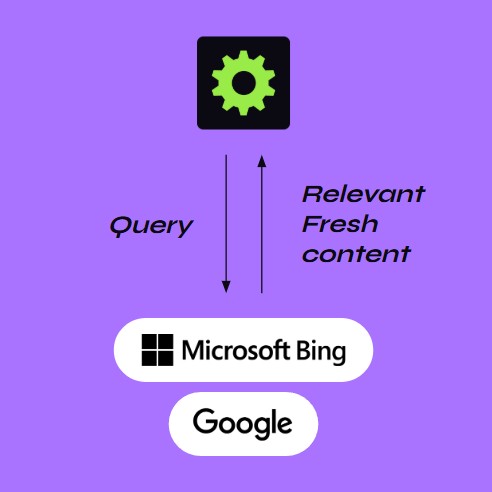
- Prompting bots to crawl through tools like IndexNow or pushing updates directly to platforms with solutions like Push to Bing (the platform that powers ChatGPT and Perplexity). This is especially helpful around dynamic sales like Black Friday or other promotions.
- You can even pre-render flat HTML versions of your web pages for AI bots through tools like Botify Speedworkers, making it a lot easier for them to parse your content.
Clicks are the wrong metric for the AI era
Once you optimize your site for AI, you’re still left with the problem of decreasing clicks. It’s anxiety-inducing, but it’s not the real issue. What is? As AJ puts it, “You’re using yesterday’s metric for tomorrow.”
If AI is summarizing and filtering your content on behalf of users, measuring clicks alone is misleading. What matters more now is visibility within AI platforms.
Instead of clicks, impressions, and conversions, you should start to focus on how and when your brand appears in AI-generated responses in comparison to your competitors by measuring:
- Brand mentions
- Citations count
- Share of visibility
- Revenue impact and contribution
Lay the foundation now or get locked out later
In the near future, customers won’t want to “break up” with whatever AI tools they’re using. They’ll have built what AJ calls a “personalization layer” with the generative AI model of their choice. This means if your brand isn’t part of that personalization now, it’ll be much harder to insert yourself later.
To be part of that foundational personalization, here are the immediate steps AJ recommends:
- Align your website and content with AI intent: Stop seeing AI as a backend tool. Start thinking about how it finds, reads, and recommends your content.
- Conduct AI technical and content audits: Make sure AI tools can access the most current version of your content and inventory. Be ready for AI bots and agents to access your site for live updates.
- Define your strategic roadmap and set rules for AI access to your content: Know when AI bots hit your site, why, and which you want to let through. For example, do you want LLMs trained on your content? If so, all of your content, or only some? “I know it's not super exciting, but you need [a governance plan],” says AJ. “We were talking with a big publisher and they were super excited because their AI traffic jumped. And then we showed them that it was TikTok's training algorithm that was training on their data. It wasn't actual users.” Decide what bots you’re going to allow and which you need to block based on your website’s business priorities.
- Redefine how you measure success: Clicks are fading. Visibility is the new gold standard. Start tracking how often you’re appearing in AI responses to get the full picture. A good place to begin is query pattern analysis from your Google Search Console data. Look for longer (6-10+ words), more natural language searches that suggest AI mediation.
By taking these steps now, you’ll be able to future-proof your brand for your new consumer segment: AI.
Need help getting started? Be sure to download the structured data cheat sheet and our new guide, Be Found Everywhere: Your AI Search Playbook.
.png)

.svg)


.svg)
