
.svg)


During the 2025 Black Friday shopping season, AI-powered search and shopping agents were still early in their adoption lifecycle. This year, they’ll be much more prevalent. Everyday shoppers are increasingly asking ChatGPT, Gemini, and Google AI Mode to find deals before they ever visit a retailer's site, and the agents doing that work are crawling your product pages and feeds at a much larger scale than what they were twelve months ago.
AI bot activity on retail sites has increased over five times year-over-year. Agentic checkout protocols that were very newly released or that didn’t exist last Black Friday, including OpenAI's Agentic Commerce Protocol (ACP) and Google's Universal Commerce Protocol (UCP), are now fully operational, with major retailers and payment processors adopting them. Put together, this will be the first Black Friday where retailers could reasonably attribute 5% or more of revenue to AI shopping channels, making it the first holiday season where your AI visibility can make a real difference in winning or losing shoppers.
The good news for brands is that most enterprise retailers haven't shifted strategies to meaningfully address AI commerce yet. Many are waiting to see how the season plays out before committing resources to AI commerce, so their hesitation is your opening. The brands who act now, even with just a handful of targeted changes, will have an advantage in AI shopping experiences over competitors who are still strategizing.
To be one of those successful brands this Black Friday, here are four actions worth prioritizing between now and November.
1. Prepare AI-ready product feeds
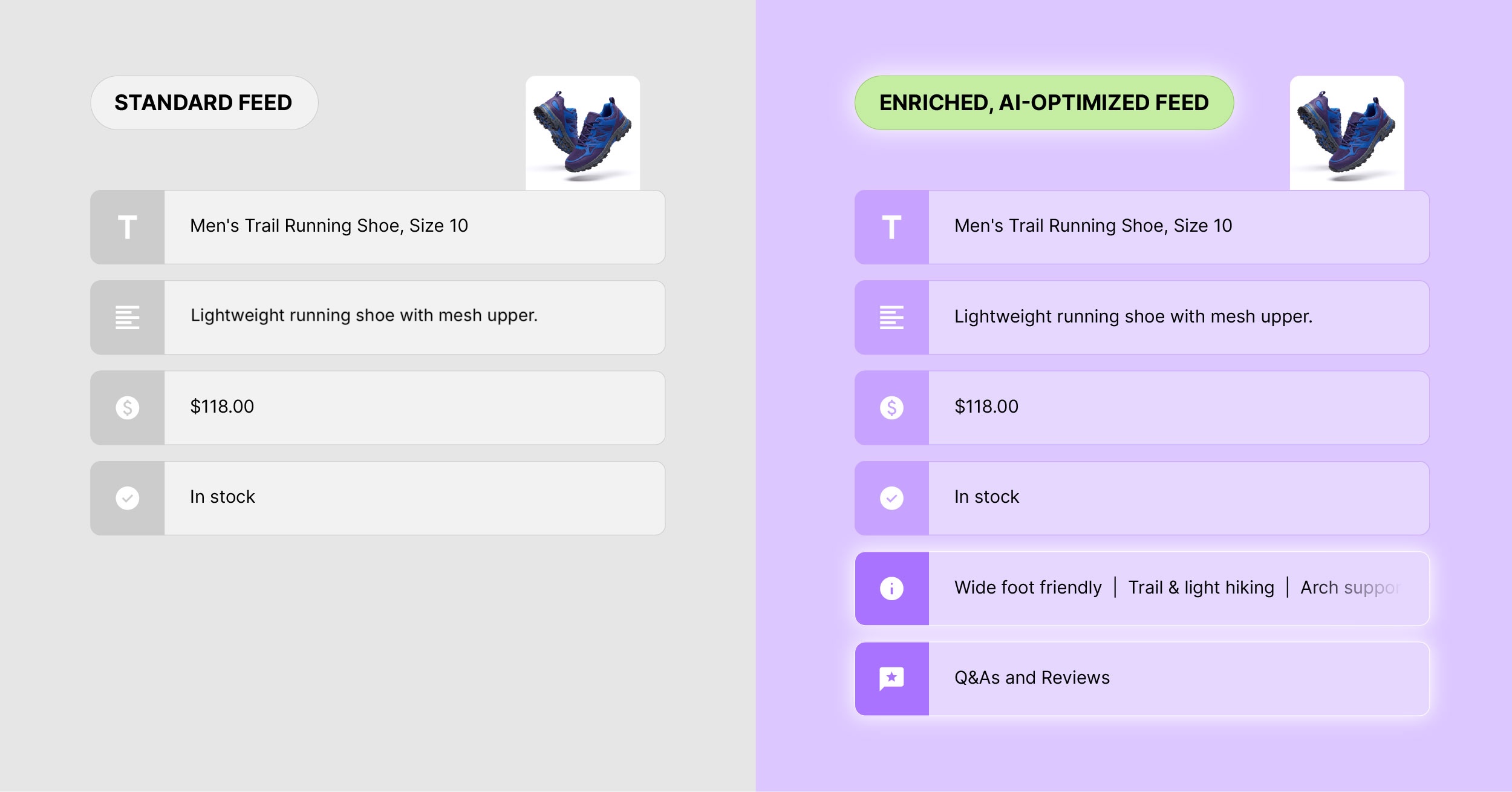
Your product feeds are your most powerful tool for showing up in AI shopping experiences, especially because they don't require a site rebuild or an engineering sprint to implement. What they do require is accurate, context-rich data that meets the compliance standards AI platforms are built on, with ACP and UCP being the two that matter most heading into this holiday season.
Rather than waiting to be crawled and hoping an agent finds your updated pricing before it finds your competitor's, by updating your product feeds for AI platforms, you're proactively pushing your product data directly to the systems your customers are already using. Speed matters here specifically because Black Friday pricing changes quickly, sometimes hour to hour. A product feed that updates with a delay means AI platforms are showing the wrong price when a shopper asks, and will thus be deprioritized.
We cover everything you need to consider to make your product feeds AI-ready in our feed readiness checklist. And if you’re ready to push optimized product feeds at scale, Botify’s AgenticCatalog can help you handle this by automatically delivering complete, protocol-compliant pricing or availability changes.
2. Translate and deliver content directly to agents
Product feeds cover the transactional data agents need at checkout, but agents still need context earlier in the shopping journey to decide whether to recommend you at all, including reviews, FAQs, delivery policies, and any other relevant details baked into your actual product pages.
This is where most retailers still have gaps they don't know about, and one of the reasons for this is JavaScript. AI agents encounter a page as code, not as the fully rendered experience a shopper sees. When a product page relies heavily on client-side rendering, an agent can end up looking at a page that's functionally blank, even though a human visiting the same URL sees a complete listing.
Imagine: Clothing Retailer A buries its most heavily-discounted dresses deep in JavaScript-heavy category pages, while Retailer B renders everything server-side so bots see the same content shoppers do. When someone asks an AI platform for the best deal on organic cotton maxi dresses, Retailer B gets recommended and Retailer A doesn't show up in the conversation at all.
There's also a growing case for serving content in Markdown when bots request it. Markdown, a markup language that’s even simpler than HTML, strips out navigation, headers, and other page formatting, cutting page weight down by 3–5 times and giving resource-constrained bots less to sift through before they time out.
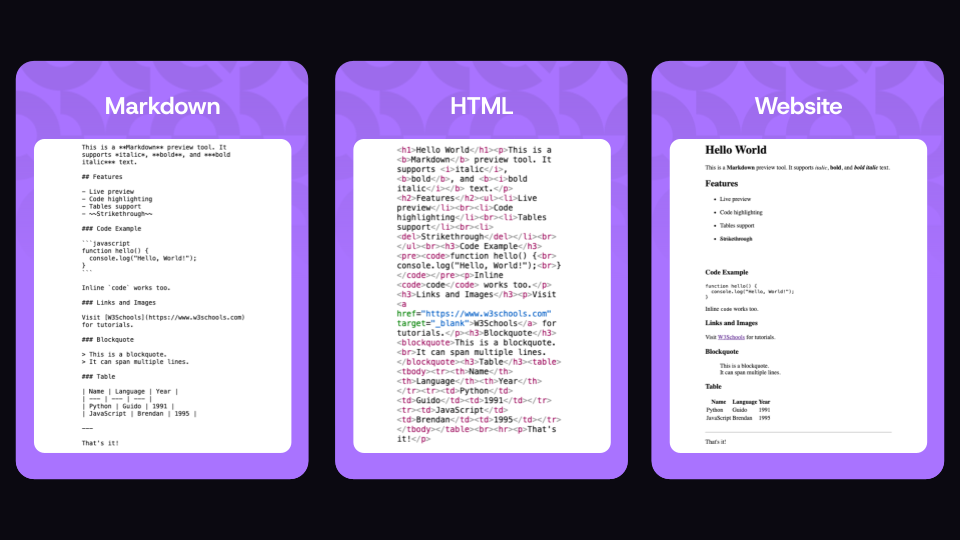
Not every crawler wants it. For example, legacy crawlers still prefer raw HTML because Markdown strips out exactly what they're looking for. However, the AI crawlers acting as the front door to your customers, the ones trying to find simple, machine-readable menu files to funnel into an LLM’s knowledge base, request it close to 100% of the time.
Whether you decide to serve up your web pages in Markdown or not, getting them ready for AI at scale, and in time for Black Friday, is a heavy lift for large retailers. Employing tools like Botify SpeedWorkers to deliver optimized content to bots will be necessary. SpeedWorkers can also detect what a given bot is asking for, and serve HTML, Markdown, or a mix, so that you're covered either way without having to guess or spend time determining what each bot needs.
3. Make Black Friday-specific content updates at scale
Promotional pricing and product availability change quickly and often during peak shopping seasons, and if updates are stuck behind an engineering backlog, you're showing inaccurate offers to shoppers and possibly missing the window to update those pages before demand surges. While this isn’t a new problem, it’s one that will get more costly every year that AI agents are part of the shopping journey, since an outdated price or an out-of-stock listing gets surfaced — or worse, cited — directly in a chat response.
Botify’s PageWorkers can be your solution here. PageWorkers lets teams push pricing, schema, and copy changes across thousands of pages instantly, schedule them to go live the moment the sale starts, and roll them back once the promotion ends. Paired with SmartContent for generating copy that matches search intent for this time of year, this keeps both traditional search and AI platforms current without anyone waiting on a sprint cycle. And now in open beta, PageWorkers at the Edge gets those optimizations directly in front of each audience that matters to the shopping journey: human shoppers, AI agents, and search bots.
4. Measure what happened, then use it
.jpg)
Once the Black Friday weekend ends, you’ll need to be able to see AI-specific metrics. This is the first holiday shopping season that the number will be large enough to be worth analyzing, so your updated dashboards need to exist before Black Friday, rather than being built afterward:
- Make sure your analytics tool is tracking AI channels to establish your baselines, and if they can’t, consider another option.
- Analyze your log files for AI activity by segmenting by agent type, to see where AI bots are currently spending time.
- Track your share of voice, branded search, and agent-completed transactions across ChatGPT, Google's AI Mode, and wherever else your category shows up, and connect that back to attributed revenue where you can.
Right now, the typical retailer sees its best AI visibility on Google's AI Mode, at 43.6%. ChatGPT visibility runs lower for most brands, closer to 26% at the median. Top performers hit over 70% visibility in AI Mode. The spread between average and top-performing brands during Black Friday will come down almost entirely to the groundwork laid with the actions mentioned above — feeds, rendering, and content delivery.
Ready to win Black Friday 2026?
Before picking which of these four actions to prioritize, it helps to know where your brand is strong and where it could use improvement. Our new AI Readiness Scorecard walks through nine dimensions — from bot infrastructure to product feeds to reporting — and places your brand into one of four maturity tiers. It takes a few minutes, and can help you figure out which gap is costing you the most.
.jpg)
Download the full AI Readiness Guide for Retailers for the complete scorecard, along with more technical detail on each action above, to get your brand AI-ready in time for this year’s holiday season.

.svg)

.svg)
