


A sports fan asks an AI assistant where to watch tonight's game. The answer they receive includes a television channel, but only by its abbreviation, and a link to a streaming app where they can watch.
Now imagine you're the media company behind both the channel and the app. Your company name is nowhere to be found in this particular result, and unless your tracking software of choice knows that the channel abbreviation, the app name, and the parent company are all you, they'll likely show up as three separate brands, with each getting a sliver of the credit.
And then your team has to report on those disparate brands. Your CMO may want one Share of Voice number for the board that covers all three. The head of your sports division might ask to see how the channel compares with other sports networks, but not every streaming service. And your marketing lead will want to know whether the campaign they ran the month prior changed how often AI tools recommend all your brands.
Situations like this are coming up more as AI visibility tracking matures. As more of the business starts using AI visibility data, more people need their own view of it. Brands also have months of data history now, and leaders want to see how it has trended over a quarter or a year.
Between May and September of this year, Botify released six AI Visibility updates built to be flexible and customizable in the way we track and report on your brand organization. These updates let you define your brand and competitors the way your organization does, show more of where you stand (from the sources AI cites to the products it recommends), and give you more flexibility in how you look at performance over time.
Define your brand and competitors the way your business does
AI platforms often refer to the same brand in different ways, so an AI-generated answer might use your legal name, or even the name of a popular product line or an abbreviation. In Botify AI Visibility, you can now merge those variants into one brand and add aliases for any other names. You can also choose whether each sub-brand rolls up to its parent or gets tracked separately. So the media brand in our example above can report one combined number to executives while the team behind its flagship TV channel tracks that sub-brand on its own.
Tracking competitors now works the same way. You can create named competitor sets of up to 10 brands, and each set gets its own Share of Voice metric. For example, the media company could build a set of sports networks for its channel, separate from the set it uses for its streaming app. That way, the head of the sports division sees how the channel compares in its own market.

Once you know who you're up against, the next question is why a competitor shows up where it does. That's where citations come in.
Mentions vs. citations
A mention means AI named a brand in its answer, while a citation means AI linked to a source while building that answer, like a review site, a publisher, a marketplace, or a brand's own website. That’s why the two don’t always line up. AI can cite a brand’s website to answer a query without ever saying its name.
With the recent addition of competitor citation benchmarking, the Competitors view in AI Visibility's Citations report puts "Mention Share of Voice" and "Citation Share of Voice" side by side for every competitor you track. Each cited domain is mapped to the brand it belongs to, so a competitor gets credit for citations of its site even when the answer doesn't name it. The comparison also follows your competitor sets, so each business line sees it for its own market.
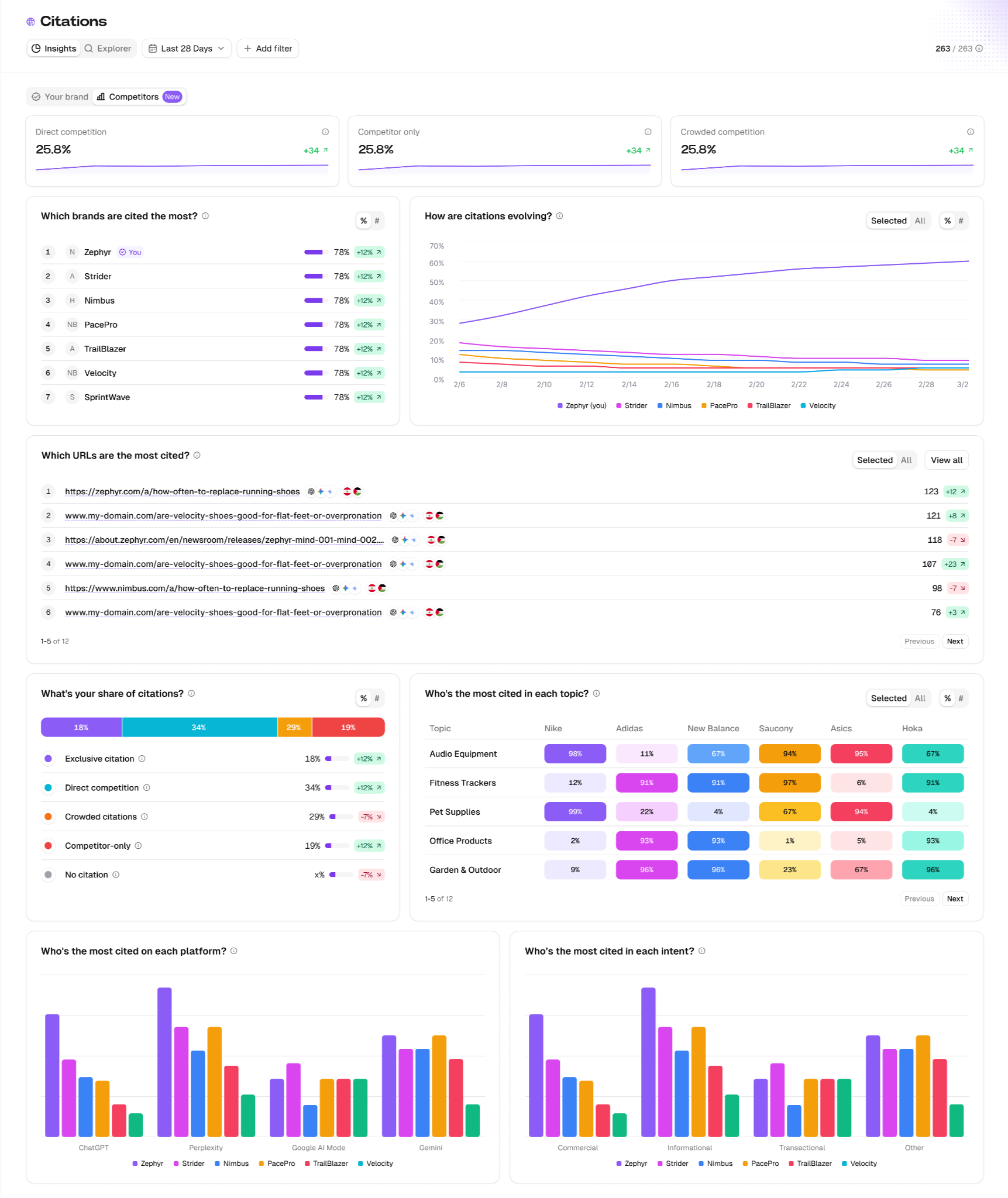
Putting the two numbers side by side helps you decide where to focus. Say a competing brand trails you in mentions but is ahead in citations. Look at the domains behind those citations, and you may find that a handful of review sites and one major publisher account for most of them. That gives your team a short list of sources to pursue through PR or targeted content. You can also spot domains that cite your competitors but never you, and add them to the same plan.
See whether your products appear in AI shopping results
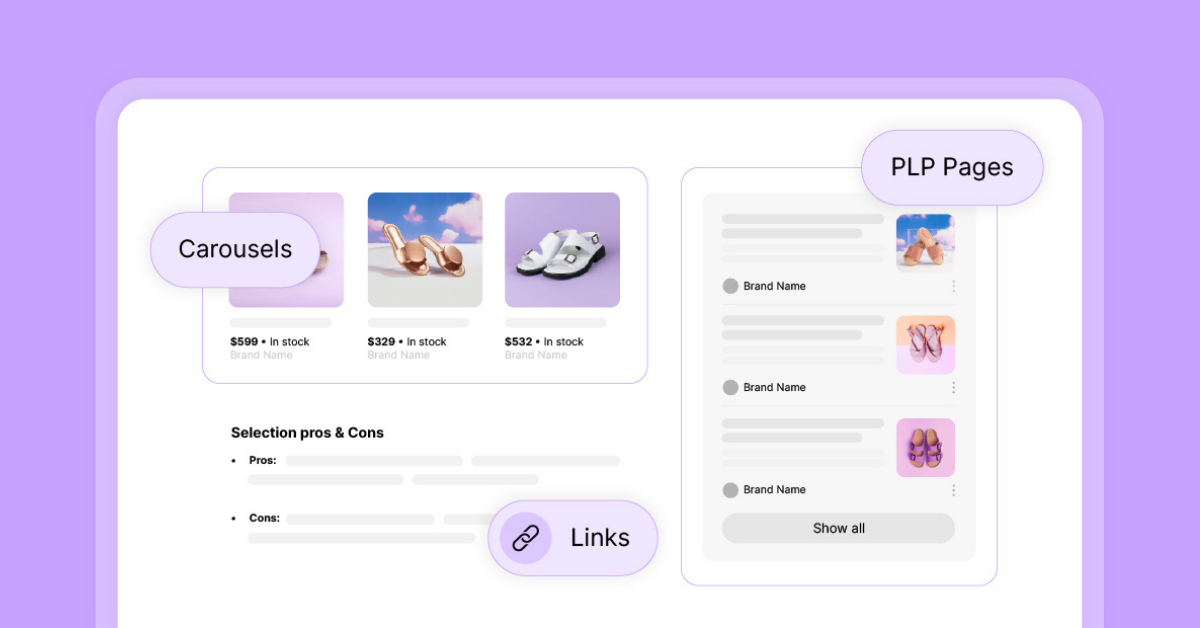
Many AI answers now include a shopping carousel of suggested products, and that's often where a potential customer decides what to buy. Unfortunately, a genuine possibility is that your brand appears in the answer while your products are missing from the carousel below it.
Product citations in AI Visibility track this for ChatGPT shopping results. Every answer is marked either "Cited", "Not cited", or "No products", and the detailed view lists out each product shown — both yours and your competitors'. A home goods retailer can filter to the answers where shopping results appear without its products, and then work out which categories to focus their attention on first.
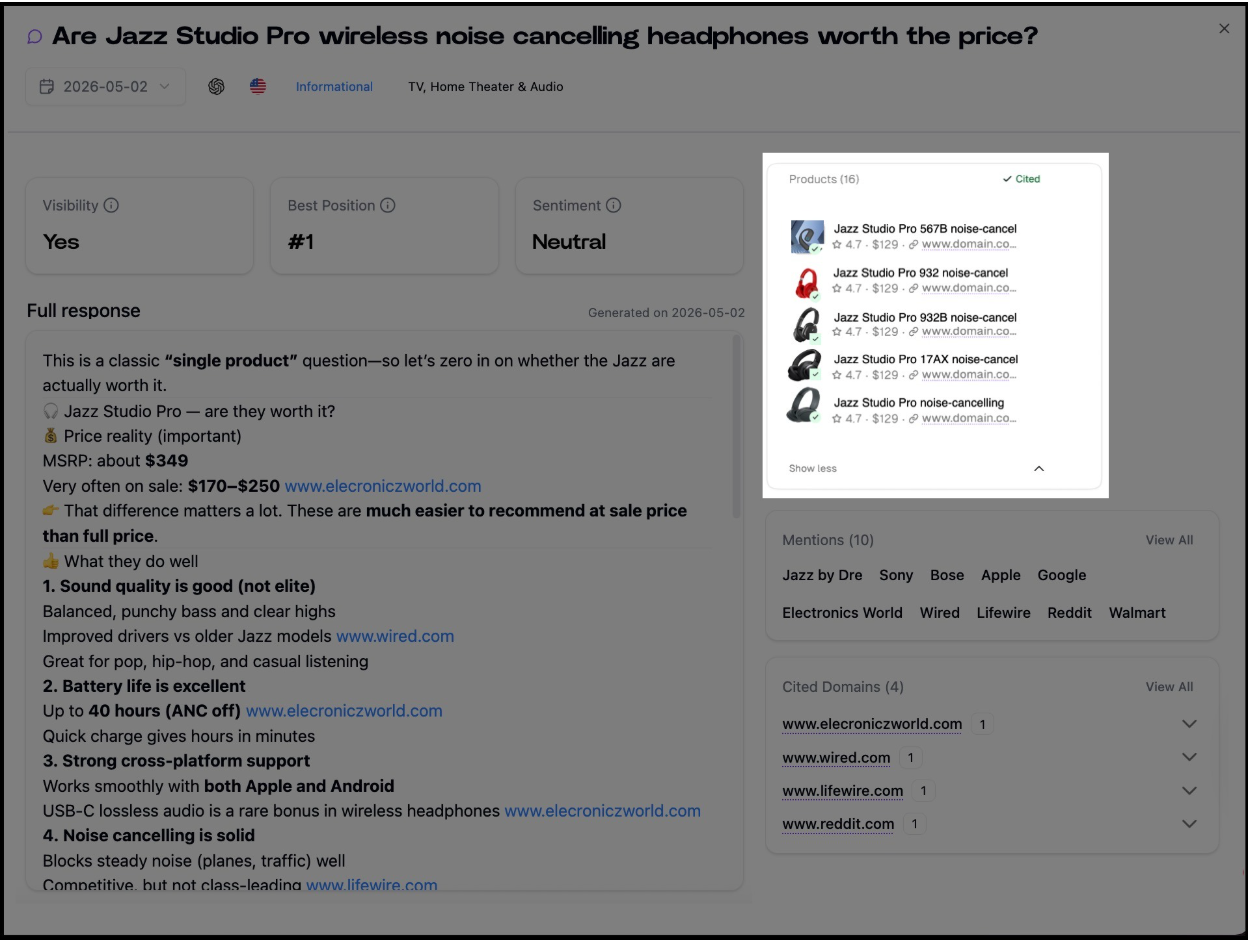
It also shows who you're up against. A fashion brand can open the shopping results for its main category and see whose products keep showing up next to its own, and it may very well be a different list from the competitors it tracks at the brand level.
If you haven't looked at product citations yet, the "Not cited" answers are a good place to start. What AI shopping experiences recommend depends partly on the quality of your product data, and Botify can help you improve it. After you improve the product data for a category, watch whether more of the answers for those prompts move from "Not cited" to "Cited".
Report on the date ranges your business uses
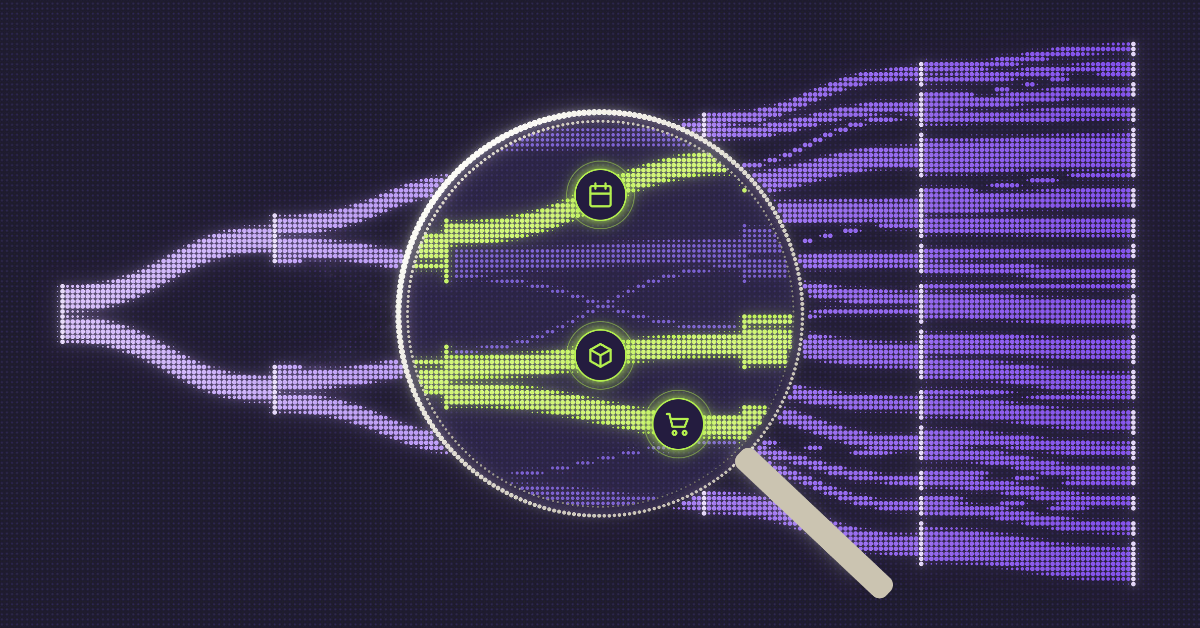
You can now pick any start and end date in AI Visibility, whether that's a promo window or a full fiscal quarter. Every number is compared against a period you choose, and each comparison view is labeled with the period it's measured against, such as "vs. Apr 1-28". The default is the previous period, and you can switch to year-over-year once you have a full 12 months of data tracked.
You can also look back at data from up to a full year prior, in the app and through the Botify MCP. An e-commerce team could use that view to find the week a category page started getting cited and match it to the site change behind it.
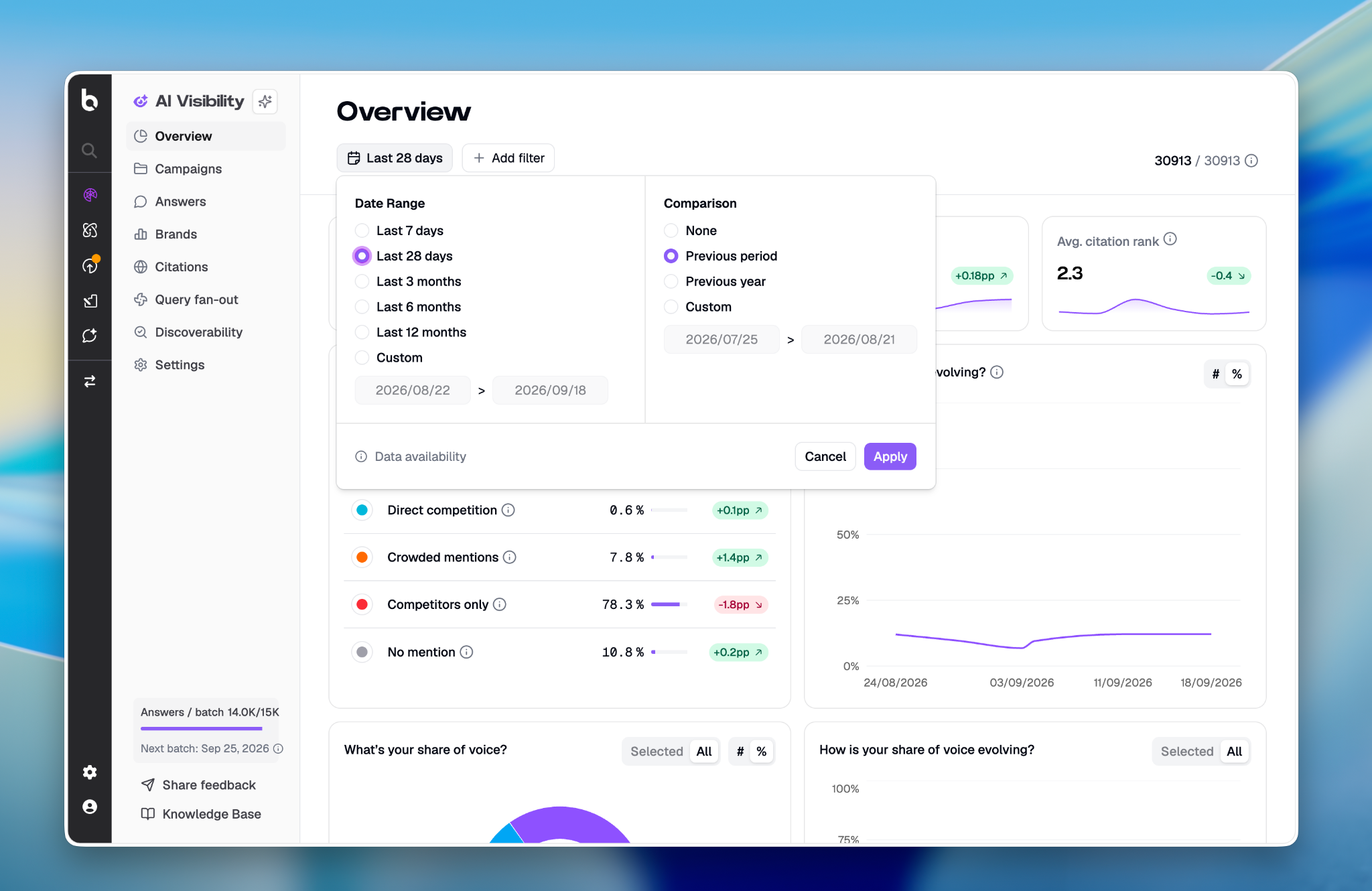
Finally, daily refresh is available for projects that change quickly, like a retailer's main catalog or a publisher's news coverage. It's set per project in AI Visibility, so you can see within days how a launch or a new article affected your visibility. Your account team can help you choose which projects to run daily, and plan prompts around it.
Putting it all together
To see how your brand can put these updates into practice, here's how an e-commerce team at an outdoor retailer might use these AI Visibility releases together:
- They start with their brand: Their own-label gear often appears in AI answers under the name of the product line, so they add it as a sub-brand that rolls up to the retailer. Then they set up two competitor sets: one for other outdoor retailers, and another for the brands they carry.
- They compare mentions and citations: In the retailer competitor set, they notice that one competitor trails them in mentions but leads in citations. Most of those citations come from two review sites, so the team adds both to its PR outreach list.
- They filter answers with shopping results for the same prompts: They find that their tents show up in AI answers, but their rain jackets are marked "Not cited" in most answers, while a competitor's jackets appear regularly. The team moves the outerwear category to the top of its list for optimization and works with Botify to fill in missing product details for those jackets.
- Later, they pick a custom date range to track: They set the dates to cover the weeks since those changes were made and compare that range to the previous period. They can see whether their citation share improved and whether more outerwear answers now include their products. That comparison goes straight into their next leadership review.
Get started with AI Visibility today
We built these updates so a company with many brands and business lines can track AI visibility as clearly as one with a single name. Leadership gets one number for the whole portfolio, while each business line still sees how it compares in its own market. And because you can see what sits behind each number, from the sources AI cites to the products it recommends, it's easier to show leadership what moved your visibility and where to focus next.
Already using AI Visibility? Ask your account manager about setting up competitor sets, whether daily refresh makes sense for your projects, and tracking your products in AI shopping results.
New to Botify? Reach out for a demo, we'd love to walk you through these updates!