
.svg)


AI search has changed what it takes to be discovered. Brands need to make their product data and site content easier for AI systems to understand and recommend, while also seeing what drives visibility and where to take action next.
This month’s Botify updates are built to help teams do exactly that, from optimizing catalogs and content for AI to connecting changes back to measurable performance. Read on to see what’s new.
AgenticCatalog is now Generally Available: Turn your product catalog into an AI discovery engine
OpenAI and Google are making product feeds a new path to discovery through protocols like ACP and UCP. But traditional feeds weren’t built for AI systems, which need richer product data and more context to trust and recommend your products.
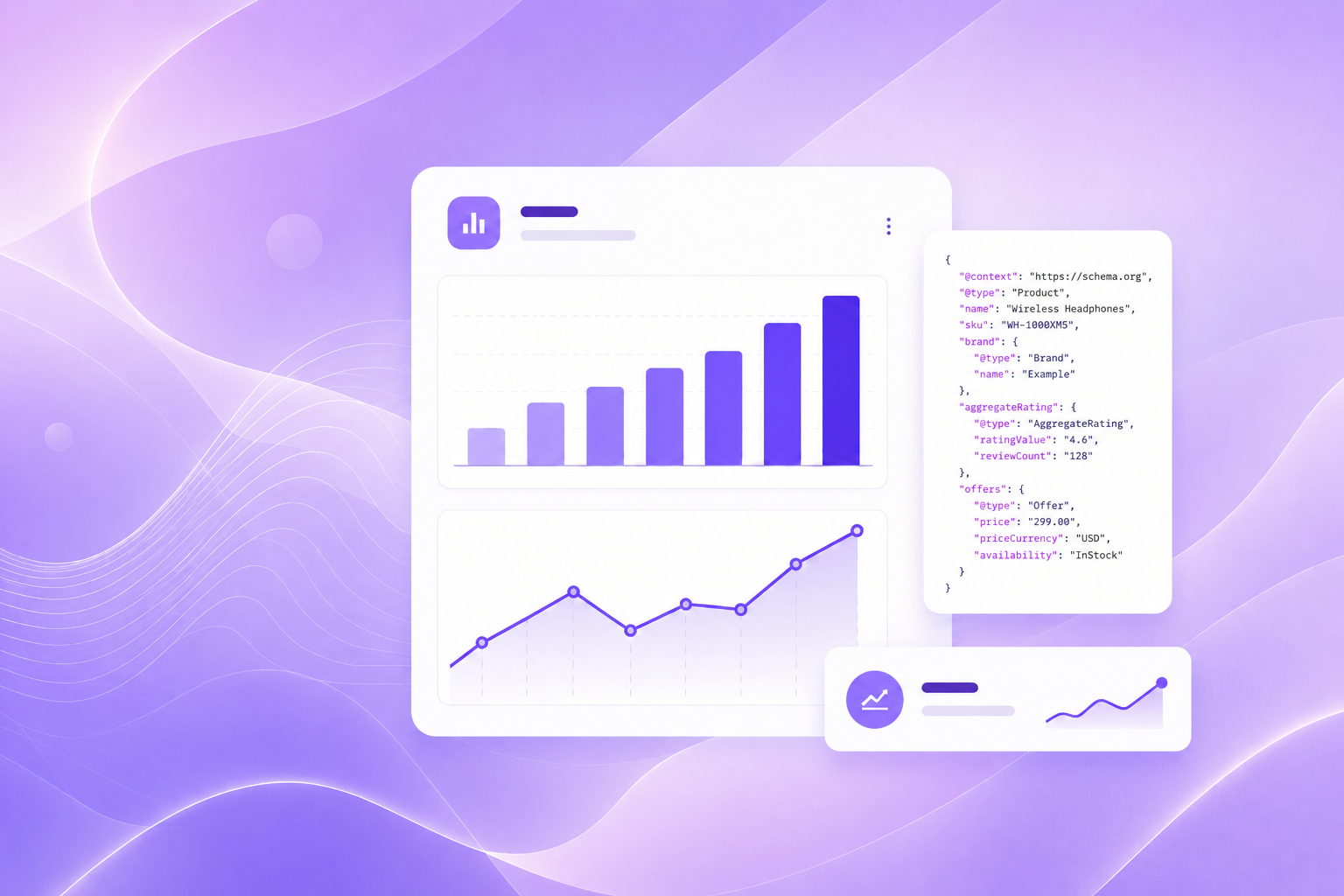
Now available to all customers, AgenticCatalog works alongside your existing feed tools to turn product signals from your site, including reviews, Q&A, and other key details, into AI-optimized feeds for OpenAI and Google. Brands can push AI-ready product data to the platforms shaping shopping discovery, help AI recommend their products at high-intent moments, and measure the impact on traffic and revenue. Learn more about AgenticCatalog here.
Want to learn more about optimizing your catalog and site for AI? Join our August 6 webinar to learn how top brands are optimizing their catalogs and sites for AI, measuring what works, and walk way with an action plan to get found by agents and chosen by shoppers.
.png)
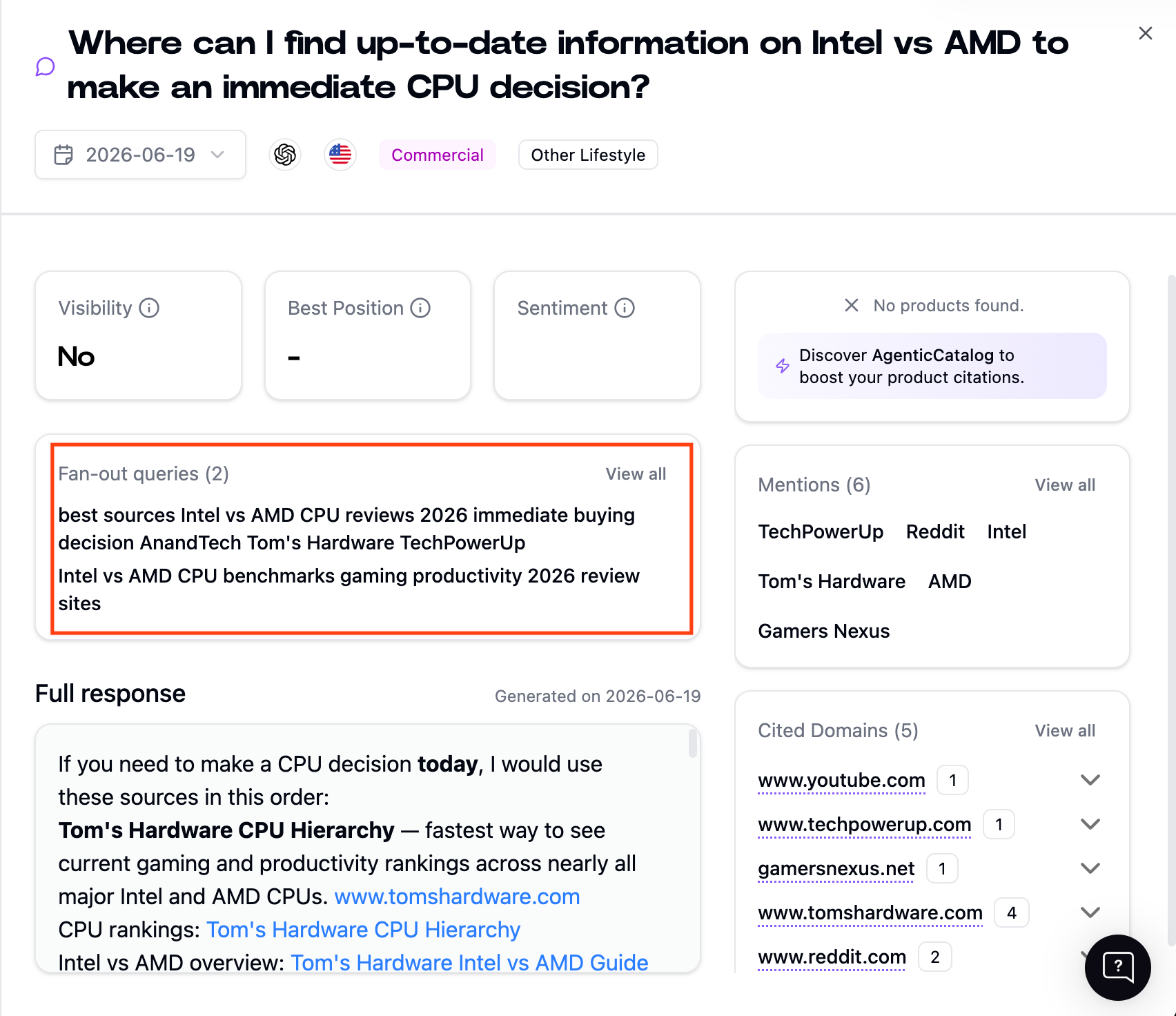
AI Visibility: See the Searches Behind Every AI Answer
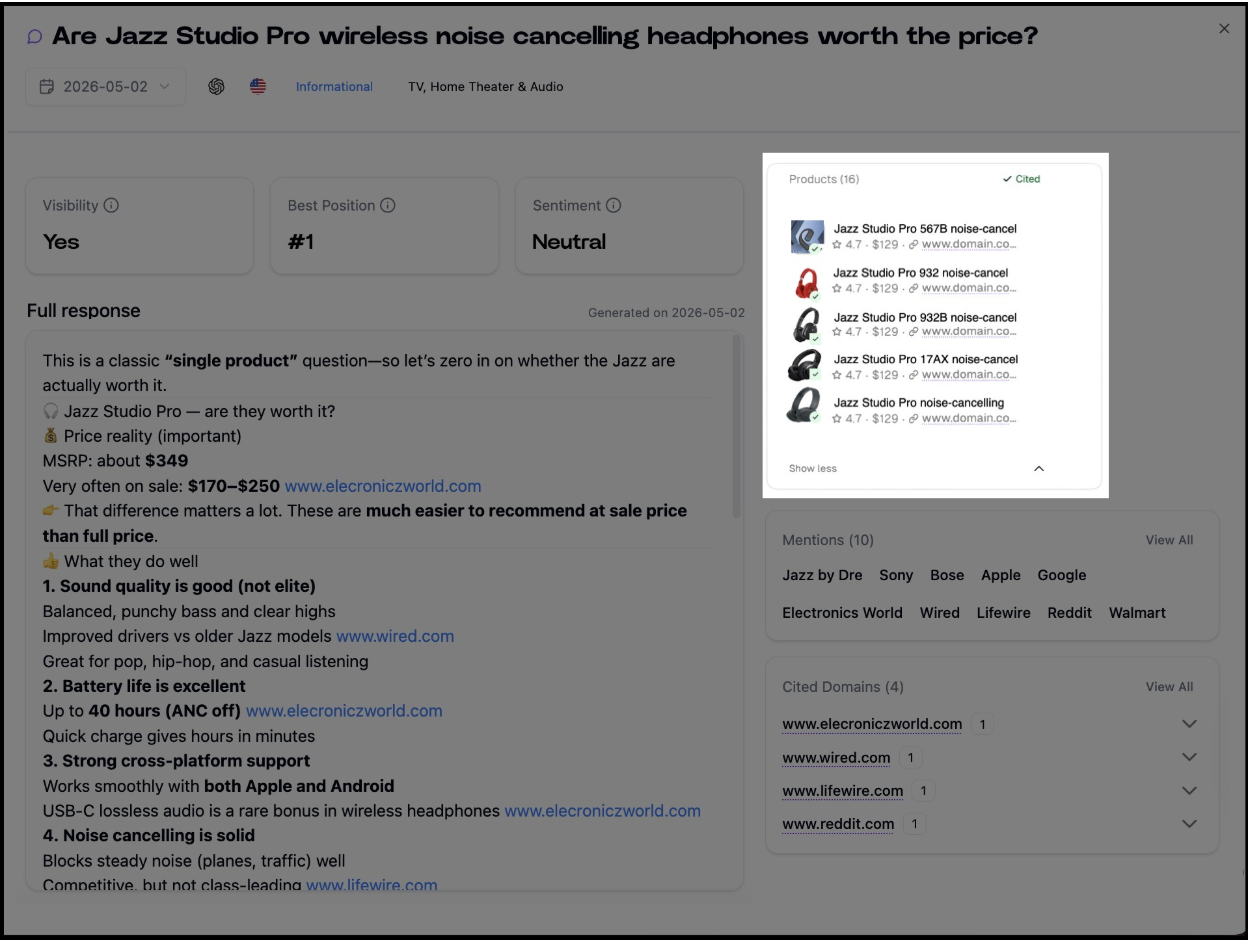
AI answers are shaped by more than a single prompt. Answer engines often expand one question into multiple related searches before generating a response. AI Visibility now brings that process to the surface for your ChatGPT campaigns. Open any ChatGPT answer in Botify to see how the original prompt was interpreted, which related searches influenced the response, and what drove your brand’s presence in the answer.
With this deeper view, you can move beyond surface-level visibility reporting. See the searches behind each AI answer, understand what shaped the response, identify content gaps, and prioritize the actions most likely to improve your presence in AI search. Support for additional platforms is on the roadmap.
Learn more here.
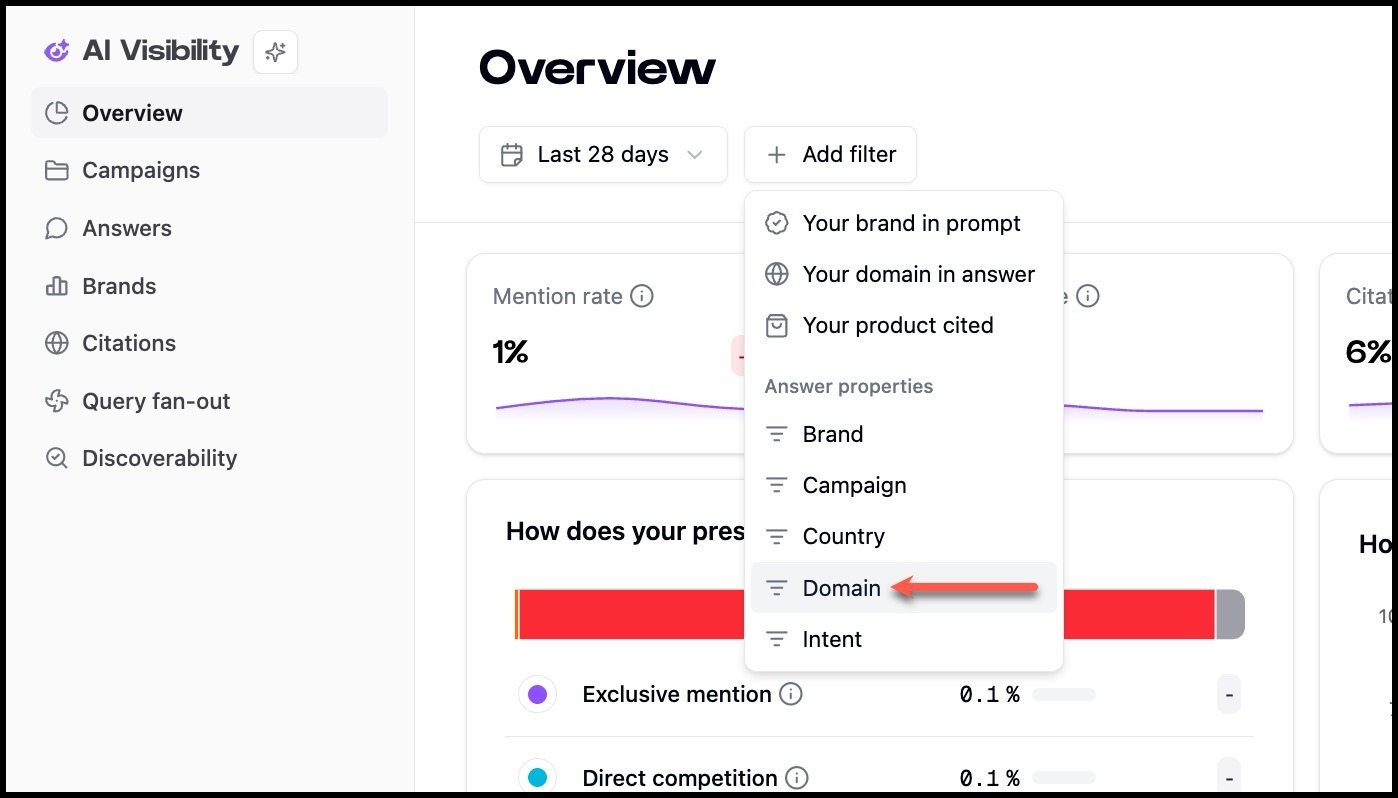
New “Domain” Filter in AI Visibility for deeper analysis
AI Visibility now makes it easier to analyze the domains shaping AI answers. With the new Domain filter, you can select one or several cited domains, including competitor sites, affiliates, publishers, marketplaces, or your own domain, and filter answers directly in Botify. Combine it with filters like period, topic, platform, or brand mention status to answer questions such as: “Where is a competitor cited, but my brand is missing?” Now you can spot citation gaps, competitive threats, and optimization opportunities in seconds.
Learn more about AI Visibility’s report filters in the knowledge base.
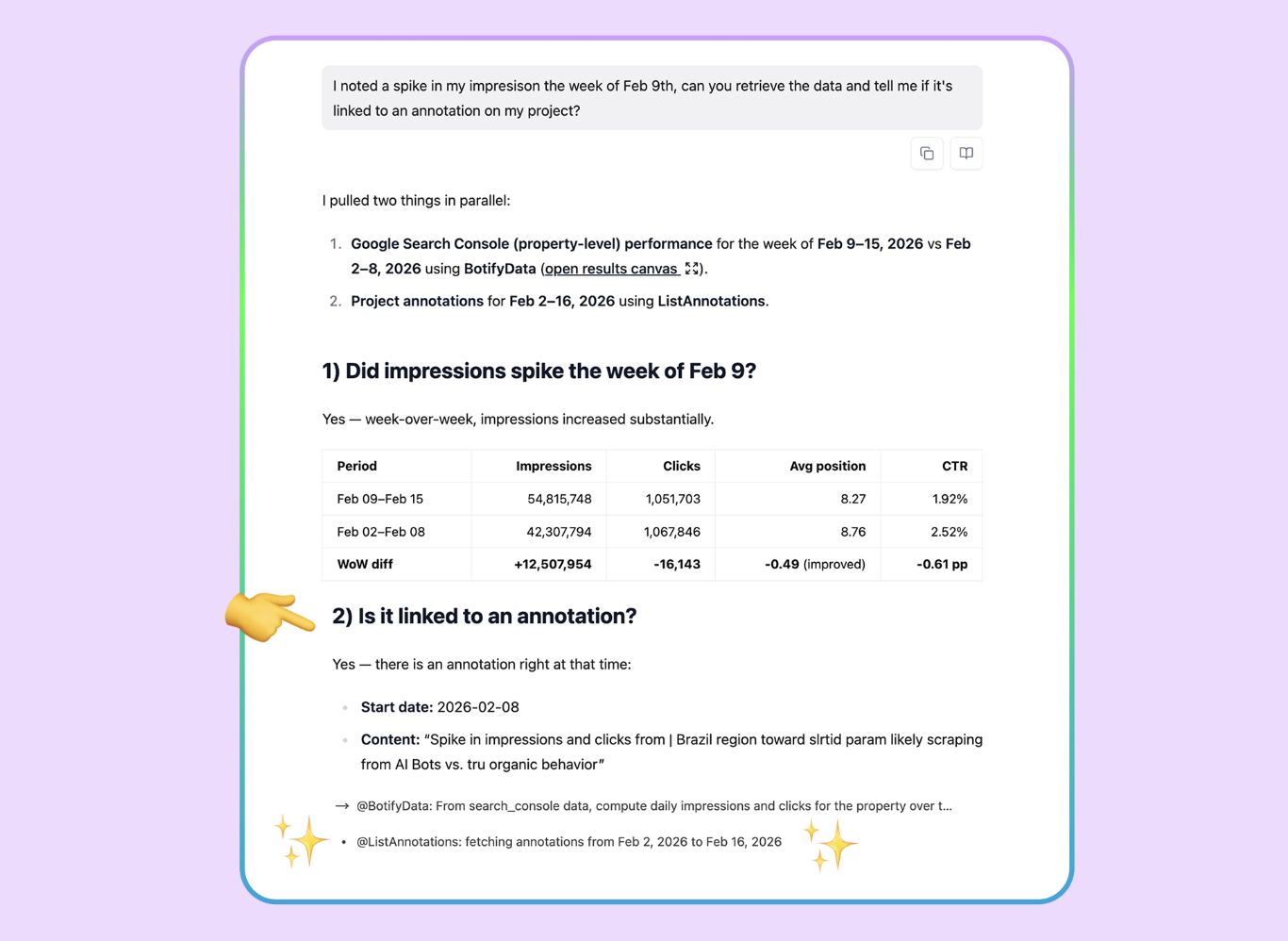
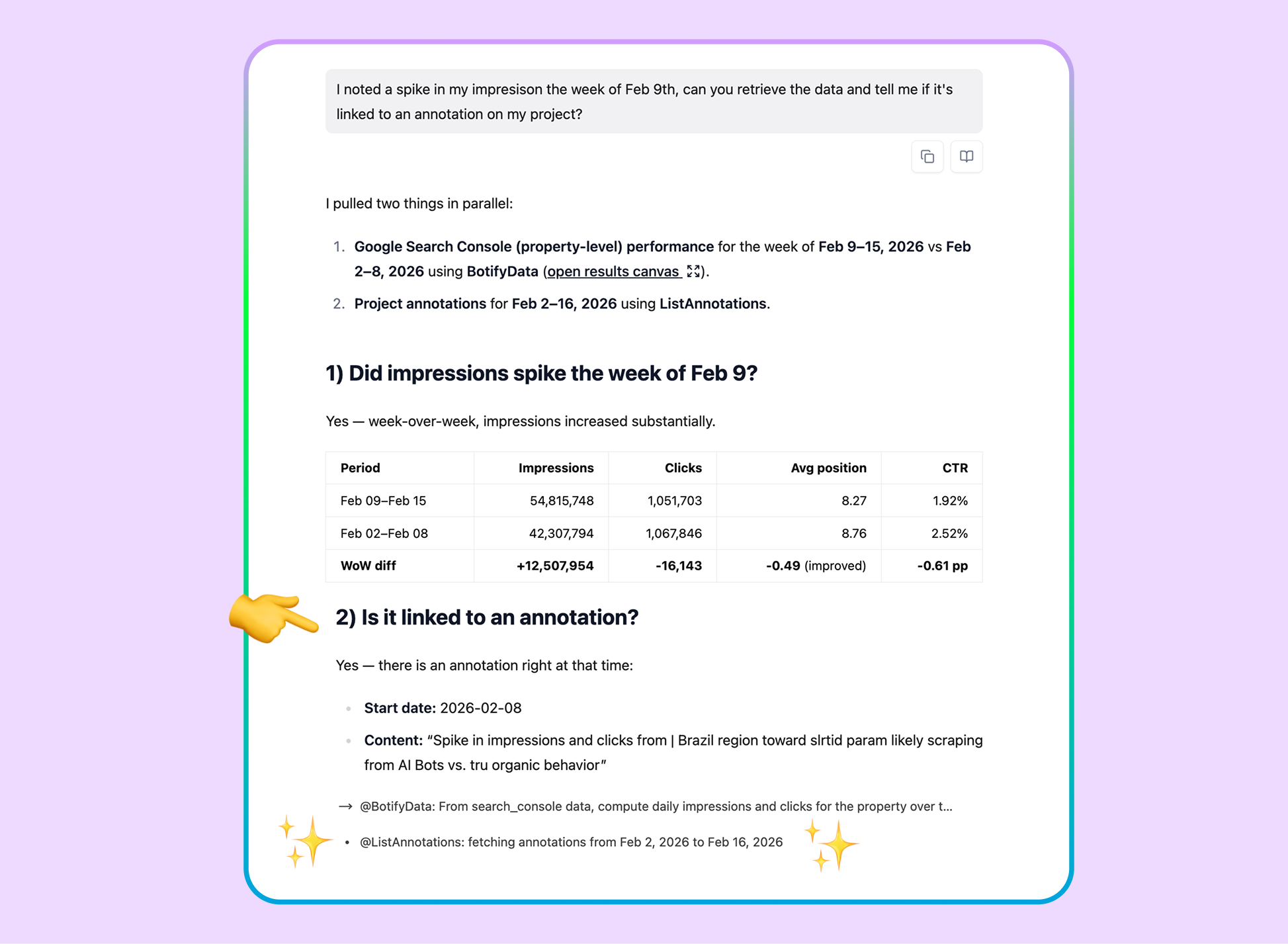
Annotation Agent in Botify Assist: Understand All of Your Annotations in One Place
Annotations help you mark important changes directly on Botify trend charts, from traffic drops and site migrations to major algorithm updates. Now, the new Annotation Agent in Botify Assist makes those insights easier to find and use.
Ask it to surface your annotations, and it returns a complete, filterable view across every chart in the platform. Whether you’re preparing a performance report or investigating an unexpected metric shift, you can quickly see what happened, when it happened, and why it may matter without digging through charts manually.
Learn how to add annotations here.
Preview Markdown delivery in SpeedWorkers: Ensure AI Bots Can Easily Interpret Your Content
AI bots don’t always need the full HTML experience on a site. In fact, heavy templates, navigation, and page noise can make it harder for them to quickly understand and extract the content that matters. With SpeedWorkers, brands can opt to serve a simplified, Markdown version of site pages to selected AI bots, while traditional search bots continue receiving fully rendered HTML.
Now teams can preview exactly what SpeedWorkers is delivering to AI bots, whether that’s HTML, Markdown, or both. That makes it faster to validate output, troubleshoot issues, and serve AI-friendly content with confidence.
Learn more about serving Markdown through SpeedWorkers here.
.svg)

.svg)
